
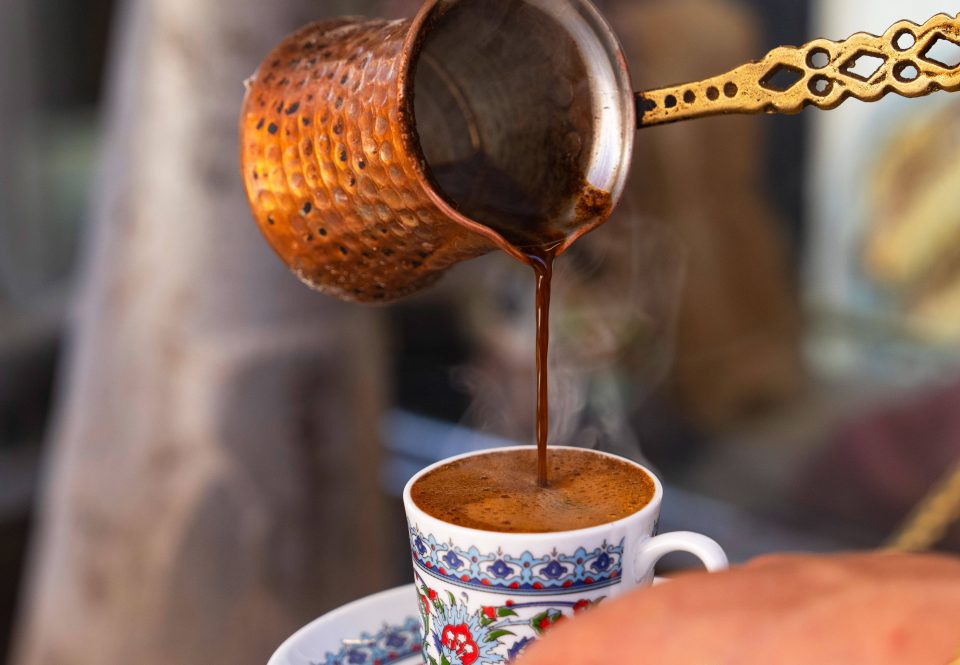
Renowned for its rich aroma and deep flavour, Turkish coffee is one of Türkiye’s most treasured cultural traditions. Its unique preparation and serving methods, along with its social and historical significance, make this beverage an essential experience for any visitor to Türkiye.
Turkish coffee was inscribed on UNESCO’s Intangible Cultural Heritage of Humanity List in 2013, and since then, December 5 —the date of this recognition —has been officially celebrated as “World Turkish Coffee Day”. However, this year, Turkish coffee once again reinforced its cultural and historical significance on a global scale by becoming Türkiye’s first “traditional product name” officially registered in the European Union (EU).There’s truly no better place to savour a perfectly frothy cup of Turkish coffee than in Türkiye, where every sip tells a story of tradition and hospitality. Perhaps this timeless treat will even inspire your next journey to the country!

“A cup of coffee commits one to forty years of friendship”
Turkish coffee has a history spanning more than 500 years. Introduced to the Ottoman lands through Yemen in the 16th century, this exquisite beverage soon captured the public’s hearts, leading to the opening of the first coffeehouses where deep conversations were shared. It didn’t take long for Turkish coffee to make its way into homes, eventually becoming a cherished Turkish tradition. Seeing its growing popularity, merchants started trading coffee beans across borders. Thus, Turkish coffee reached Europe, laying the foundation for the region’s coffee culture.
Beyond its rich flavour, Turkish coffee has long been a cherished ritual of connection, uniting friends and families. Once served mainly after meals, it soon found its place at engagement ceremonies, festive gatherings, and religious holidays. Offering Turkish coffee is a timeless gesture of hospitality and warmth, an expression captured in the proverb, “A cup of coffee commits one to forty years of friendship.”


The secret of the unique taste: Unchanged Brewing
What makes Turkish coffee unique is not only its power to bring people together but also the authentic culture it embodies, from its preparation to its leisurely enjoyment. One of the oldest coffee-making methods still in use, it represents Türkiye’s sustainable culinary heritage. Finely ground roasted beans are brewed with cold water—and sugar, if desired—in a small pot called a ‘cezve’, then gently heated until a perfect foam forms. When in Türkiye, you may be asked, “How would you like your coffee?”—plain, lightly sweetened (little sugar), medium, or sweet.
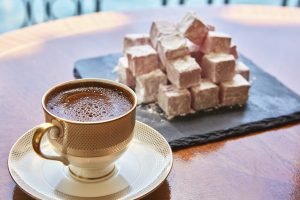
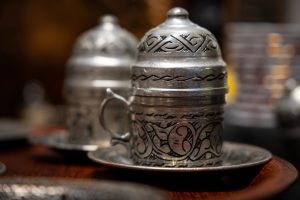
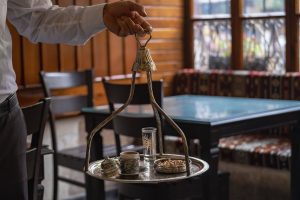
Distinguished by its grounds and rich foam, it also stands apart in its presentation. Unlike coffee served in paper cups in our fast-paced modern lives, Turkish coffee is traditionally enjoyed in tiny porcelain cups, accompanied by a glass of water and a piece of Turkish delight.

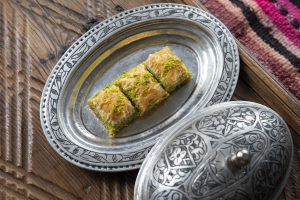
An experience unique in its taste and presentation
As you travel through Türkiye’s regions, you will encounter various interpretations of Turkish coffee. Along the Aegean coast, you can savour coffee delicately infused with mastic gum, a local speciality made possible by the region’s famed mastic trees. In Gaziantep, try menengiç coffee, made from the beans of the Pistacia terebinthus tree, also holding a geographical indication (GI) registration from the EU. In eastern provinces like Şanlıurfa and Mardin, you should definitely try mırra, a stronger and more intense brew that reflects the region’s deep-rooted traditions.You can enjoy a tasty cup of coffee anywhere in Türkiye. Whether after a meal or paired with iconic sweets like baklava and Turkish delight, this comforting drink will accompany your chit-chat. Once the coffee is finished, the grounds left in the empty cup are often used for fortune-telling, a tradition known as tasseography. Don’t forget to have fun interpreting the patterns you see in the coffee grounds and making predictions!
Download link for images: https://docs.tga.gov.tr/vpdpq7cj