
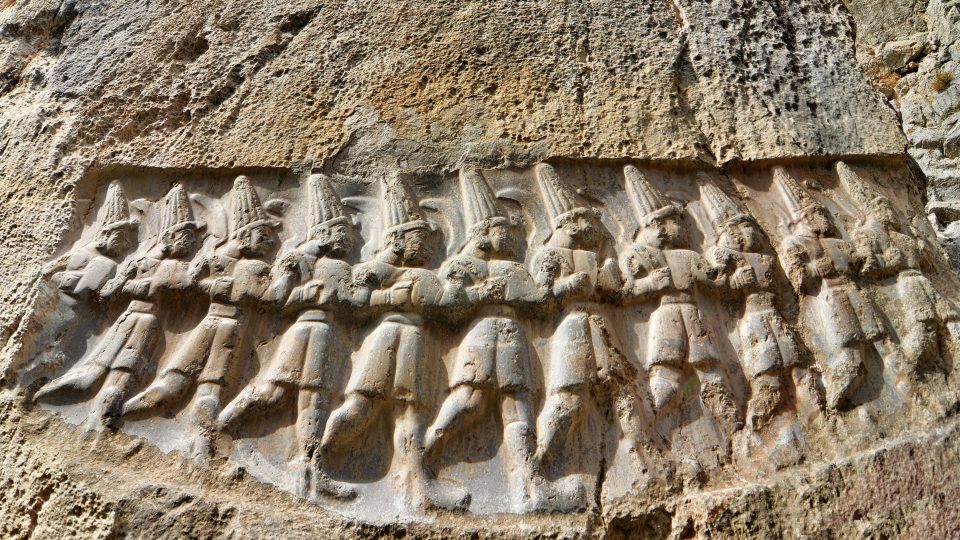
As travellers increasingly look beyond conventional sightseeing, cultural heritage is becoming a stronger motivation for travel, with visitors seeking deeper connections with the history, stories and civilisations that have shaped a destination. Türkiye is particularly well placed to meet this growing interest, with traces of different civilisations found across Anatolia and a remarkable wealth of ancient cities, archaeological sites and historic settlements. With 22 properties inscribed on the UNESCO World Heritage List and a further 80 sites on the Tentative List, Türkiye offers an extensive range of cultural heritage experiences.Among these sites is Hattusha, the ancient capital of the Hittite civilisation in Çorum and a UNESCO World Heritage Site. Offering a remarkable insight into one of the major powers of the Bronze Age, Hattusha is also home to an archive of more than 30,000 clay tablets recognised under UNESCO’s Memory of the World programme. Ongoing excavations are now revealing new chapters in the ancient city’s long history, with archaeologists recently uncovering three previously unknown tombs dating from the late 4th to the 3rd century BCE.
Bronze Age Civilisation of Many Firsts
The Hittites, one of the earliest major civilisations established in Anatolia, rose to become a superpower by the mid-14th century BCE. At its height, the empire stretched from the Aegean coast to northern Syria and controlled key trade routes. What makes the Hittites particularly fascinating today is not only the scale of their lands but also their remarkable innovations and numerous firsts in human history. The Hittites built sophisticated cities, monumental temples, fortresses and palaces, and created one of the ancient world’s largest archives of cuneiform tablets. Among these records, the Treaty of Kadesh, signed with Egypt in 1259 BCE, stands out. Regarded as the ‘world’s first known written peace treaty’, it is displayed at the İstanbul Archaeological Museums today.
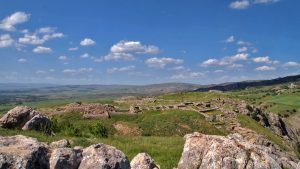
The Hittites also established the Pankus Assembly, considered one of the earliest consultative political institutions in Anatolia. They pioneered developments in family, inheritance and civil law, producing some of the earliest examples of historical record-keeping through the Royal Annals. Anatolia’s first dam, built by the Hittites at Alacahöyük more than 3,200 years ago, is still used for irrigation today. Following the traces of this influential civilisation is an unforgettable cultural journey, and there is no better place to begin than Hattusha, the magnificent capital of the Hittite Empire.
Exploring the Heart of a Mighty Empire
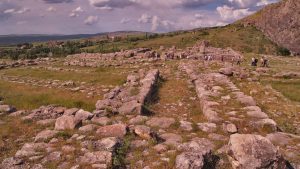
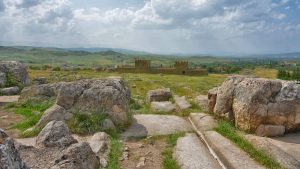
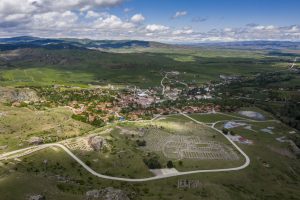
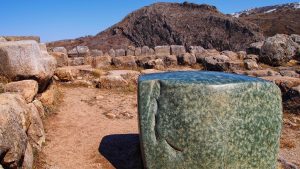
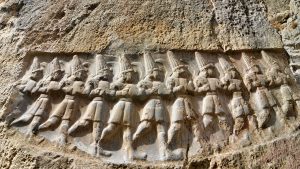
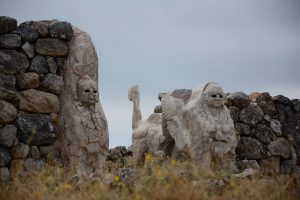
Hattusha lies in the area now known as Boğazkale in Çorum. Built into a steep hillside overlooking the fertile plain of the Kızılırmak River, the city was strategically positioned and became the Hittite Empire’s capital. Known as the “City of a Thousand Gods,” Hattusha today resembles a vast stone puzzle rising from the surrounding greenery. Its temples, monumental gates, royal buildings and fortifications offer a glimpse into the grandeur of one of the Bronze Age’s most powerful civilisations.The ancient city is divided into the Lower and Upper City. The Lower City is home to the Great Temple, while the Upper City features impressive fortification walls and monumental gates, including the Lion Gate, King’s Gate and Sphinx Gate. The Büyükkale Palace Complex, built on the site of the city’s earliest settlement, is another highlight. The journey can continue beyond Hattusha to the nearby Yazılıkaya Open-Air Sanctuary, renowned for its Hittite rock reliefs, as well as Alacahöyük, one of the empire’s most important urban centres, and Shapinuwa, one of Anatolia’s earliest administrative and military centres.
New Finds Shed Light on Hattusha’s Later Eras
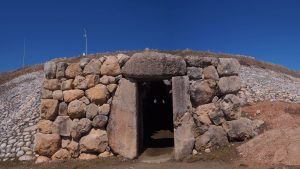
The newly discovered tombs add to growing evidence that communities continued to inhabit Hattusha long after the Hittite period. Excavations have identified eight tombs from the Early Hellenistic and Galatian periods in the area, including five uncovered during the previous season, while nine more were found further west in earlier excavations. This brings the total number of known tombs from these periods at Hattusha to 17. One of the newly uncovered tombs is particularly notable for its exceptional preservation. Surrounded by a circular stone wall approximately seven metres in diameter, with a second inner boundary for a single adult, the tomb contained an intact skeleton and a knife beside the individual’s right shoulder. Archaeologists are examining whether the knife was a burial offering or belonged to the deceased, which could provide valuable clues about burial practices of the period. The discovery is particularly significant as the later history of Hattusha remains comparatively less understood. The newly identified burials offer further insight into the settlement’s continued use and transformation across different eras. Following excavation and documentation, the tombs are planned to be restored and the area opened to visitors.
An Extension to Journey in Footsteps of Hittites
You can enrich your Hittite journey in Çorum with a short detour to Ankara, Türkiye’s capital, and continue exploring the traces of this ancient civilisation. The Museum of Anatolian Civilisations in Ankara houses a rich collection of artefacts from many civilisations that flourished across Anatolia, including an extensive Hittite collection. Displays, such as a letter sent by an Egyptian queen to a Hittite king in 1235 BCE, offer a unique glimpse into the ancient civilisation. Ankara also offers a diverse cultural landscape, ranging from Ankara Castle and Anıtkabir—the final resting place of Atatürk, the founder of the Turkish Republic—to the Nation’s Library and the Roman Baths, blending historical heritage with modern urban life. The city is also known for its local flavours, including the famous Ankara simit, döner wraps from traditional Aspava eateries, and Beypazarı kurusu, a double-baked dry buttery biscuit.
Know Before You Go
– How to reach: Amasya Merzifon Airport is the nearest airport, approximately one hour from Çorum by car or bus.
– Where to stay: Çorum offers a range of accommodation options, from chain hotels to pensions.
– What to taste: You can try many local flavours such as İskilip Dolması and Çorum mantısı.
– What to buy: One of the symbols of Çorum is roasted chickpeas (leblebi), which make the perfect souvenir. You can also find varieties such as pepper-coated, sugar-coated, and chocolate-covered leblebi.
Please click the link for images