
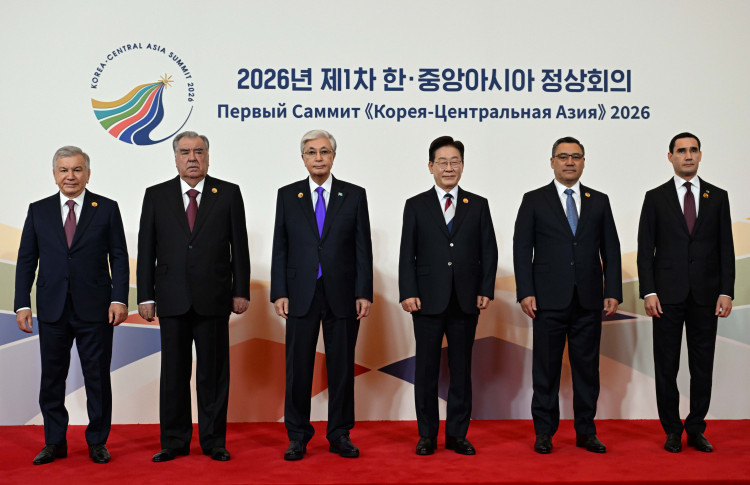
On Wednesday, 16 September, President of Turkmenistan Serdar Berdimuhamedov attended the first Central Asia–Republic of Korea Summit and the inaugural six-party Business Summit in Seoul.
During the summit, Turkmenistan presented the “Smart City Diplomacy” initiative, proposed expanding cooperation in education and digital skills for youth, stepping up joint scientific research, and enhancing cultural and sports exchanges. Special emphasis was placed on parliamentary diplomacy as a complementary mechanism for strengthening mutual trust.
The summit and the accompanying inaugural six-party Business Summit concluded with the adoption of the Seoul Declaration, joint statements, and a series of key initiatives.
Initiatives of Turkmenistan
Turkmenistan proposed broadening the cooperation agenda between the Republic of Korea and Central Asian nations to encompass smart city development, digital education, joint scientific projects, youth and cultural exchanges, as well as sports and parliamentary interaction. President Serdar Berdimuhamedov made these remarks while addressing the inaugural Central Asia–Republic of Korea Summit in Seoul on 16 September 2026.
According to the President, holding the summit at the highest level lays the groundwork for a new chapter of interaction between the Republic of Korea and the Central Asian states.
Urban development was highlighted as one of the key areas proposed by Turkmenistan. Specifically, the country recalled its previously announced “Smart City Diplomacy” initiative, which aims to combine efforts, exchange expertise and information, jointly implement scientific and technological achievements, and establish integrated, efficient models of urban planning and development.
The President also outlined a broad spectrum of sectors for potential partnership between the regional countries and the Republic of Korea, including industry, agriculture, environmental protection, water resource management, healthcare, services, and tourism.
In addition, the President of Turkmenistan put forward several proposals concerning education and youth. Ashgabat suggests fostering cooperation between educational institutions in Central Asia and the Republic of Korea, including through dual-degree programs.
Turkmenistan advocated for enhancing young people’s digital competencies and organizing joint academic olympiads, competitions, and conferences.
In the scientific field, the President proposed boosting joint research and design-and-survey initiatives among young scholars, as well as establishing an Institute for Supporting the Development and Implementation of Youth Innovative Ideas.
Turkmenistan’s proposals also extend to humanitarian cooperation. In particular, the country suggested drafting a Roadmap for Intercultural Youth Exchanges between Central Asian Countries and the Republic of Korea, along with a “Young Talents” program. Potential formats for collaboration include festivals, concerts, creative competitions, and other joint events.
Sports was named as another vital area. “We also propose developing sports cooperation, including expert exchanges, promoting healthy lifestyles, and exploring the organization of International Youth Sports Games of Central Asia and the Republic of Korea,” President Berdimuhamedov said.
He also underscored the value of parliamentary diplomacy as a supplement to intergovernmental collaboration and a tool to build international trust.
Concluding his address, Serdar Berdimuhamedov emphasized that the new format should facilitate a transition from isolated areas of interaction to a long-term system of partnership.
“Turkmenistan is ready to actively contribute to building trust and fostering an equal, mutually beneficial partnership between our countries, and to be an active participant in this format,” the Head of State emphasized.
He noted that the Central Asia–Republic of Korea Cooperation Forum serves the long-term interests of the participating nations and has the potential to become a key driver in shaping sustainable international cooperation mechanisms.