
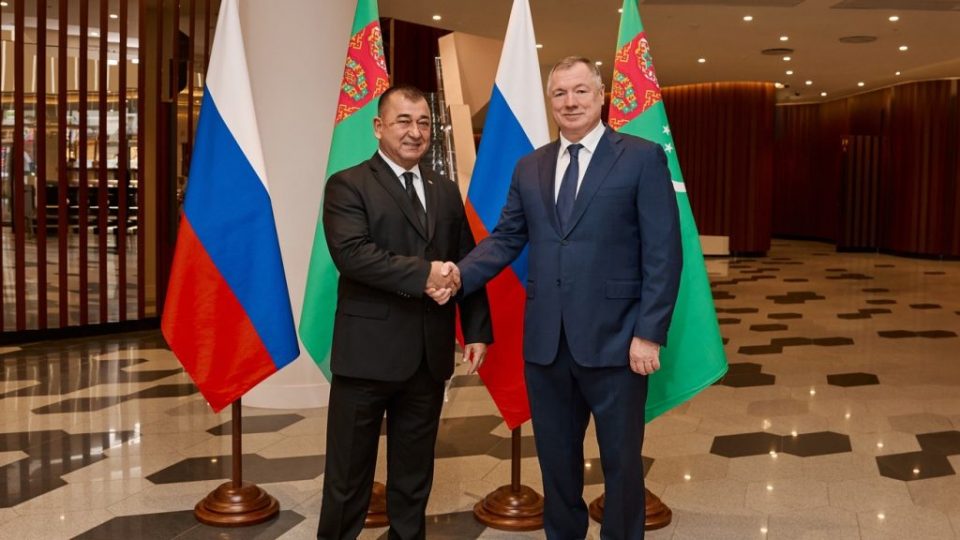
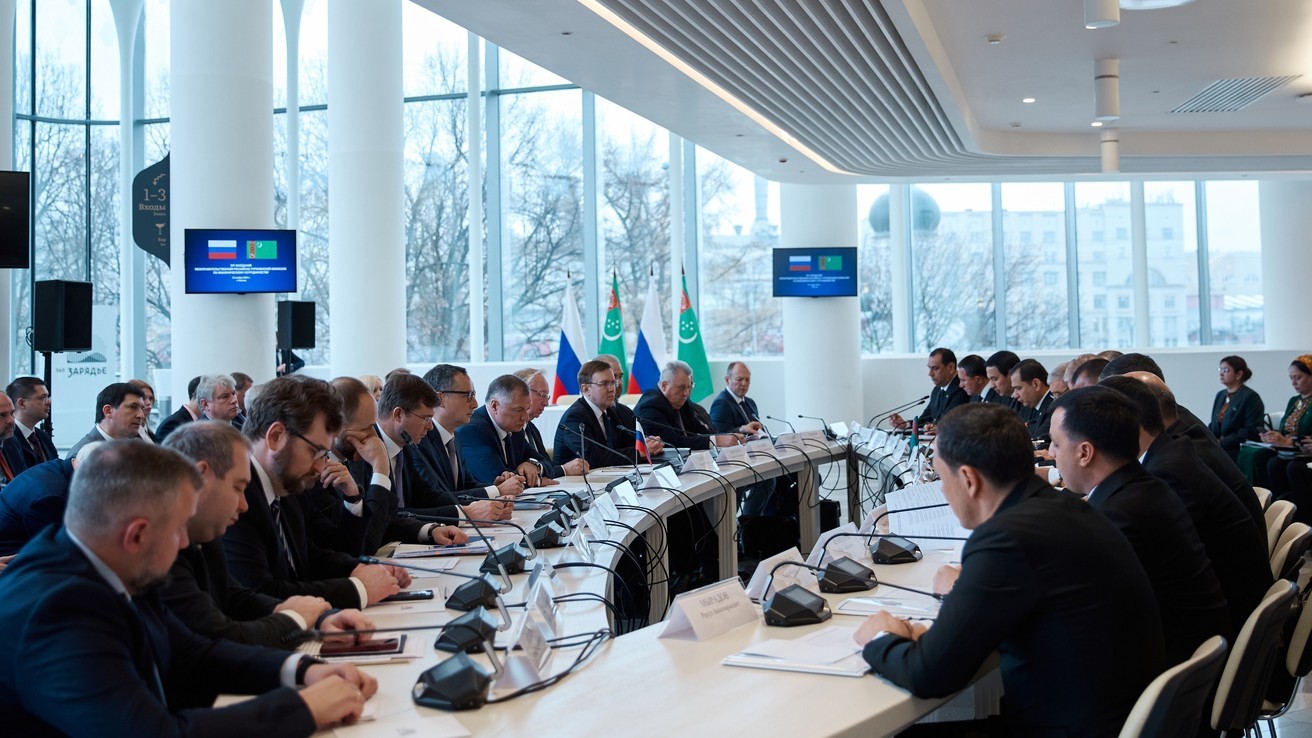
On 23 November 2026, the 14th meeting of the Intergovernmental Russian-Turkmen Commission on Economic Cooperation convened in Moscow, co-chaired by Deputy Chairman of the Cabinet of Ministers of Turkmenistan Nokerguly Atagulyev and Deputy Prime Minister of Russia Marat Khusnullin. According to the official website of the Russian Government, the discussions centered on trade, economic, financial, banking, transport, and cultural-humanitarian cooperation.
During the session, Khusnullin highlighted the steady expansion of bilateral cooperation across key sectors, including transport and logistics, industry, energy, agriculture, trade, education, and culture.
“To date, we have recorded a 30% increase in imports from Turkmenistan to Russia, reaching $252.5 million. This growth has been driven by supplies of food, agricultural products, chemical threads and fibers, cotton, and textiles,” he stated.
The Russian Deputy Prime Minister also underscored the strategic importance of developing the eastern branch of the International North–South Transport Corridor (INSTC). He noted that the route is vital for strengthening transport connectivity among Russia, Turkmenistan, Kazakhstan, and Iran, expanding trade ties, and improving market access for both Russian and Turkmen goods.
Khusnullin cited tangible results from the joint efforts of Russian and Turkmen railways: average transit times for container trains along the eastern route have been cut in half, dropping from 33 to 16 days. Over the first nine months of the year, rail freight volumes grew by 11.5% to reach 441,200 tons.
“We highly value our direct, trust-based dialogue, which allows us to promptly and constructively resolve bilateral policy issues,” noted Nokerguly Atagulyev. “An assessment of the measures outlined in the protocol of the 13th Commission meeting shows that the set objectives have largely been met or are currently underway. Several of these have been carried over into today’s draft protocol, alongside new proposals that will open up additional opportunities to expand our bilateral partnership.”
Both sides also devoted special attention to humanitarian ties, pointing to the Joint Russian-Turkmen Secondary School named after A.S. Pushkin as a benchmark for high educational standards.
Additionally, Khusnullin noted that Russia places great importance on expanding cooperation in physical education and sports, including equestrian sports, with the Russian Ministry of Sports having drafted a bilateral sports cooperation action plan for 2027–2028.
Interregional ties and collaboration in the IT sector—specifically covering e-government, information security, artificial intelligence, and cloud technologies—were also on the agenda.
Following the talks, the two sides signed the official protocol of the 14th meeting of the Intergovernmental Russian-Turkmen Commission on Economic Cooperation.